
Most people picture Croatia as beaches and medieval towns, yet the land is surprisingly mountainous. Steep limestone ranges rise straight above the coast, dense beech forests cover the interior and a well marked network of footpaths connects summits, huts and hidden springs. Locals hike each weekend, from retired couples with walking poles to young families carrying toddlers on their backs. Hiking in Croatia shows a wild, quiet side of Croatia that most tourists never see, often only half an hour from a crowded beach.
The best seasons are spring and autumn. In summer, coastal mountains get brutally hot by late morning and shade is rare, so set off at dawn or choose forested trails inland. Winter brings snow to the higher ranges, beautiful but serious, and only for experienced walkers with proper equipment.
Trails are marked with the Croatian waymark, a red circle with a white center, painted on rocks and trees. Carry water, because springs are scarce in karst country, wear sturdy shoes and let someone know your route. In an emergency, dial 112, which connects to the mountain rescue service when needed.
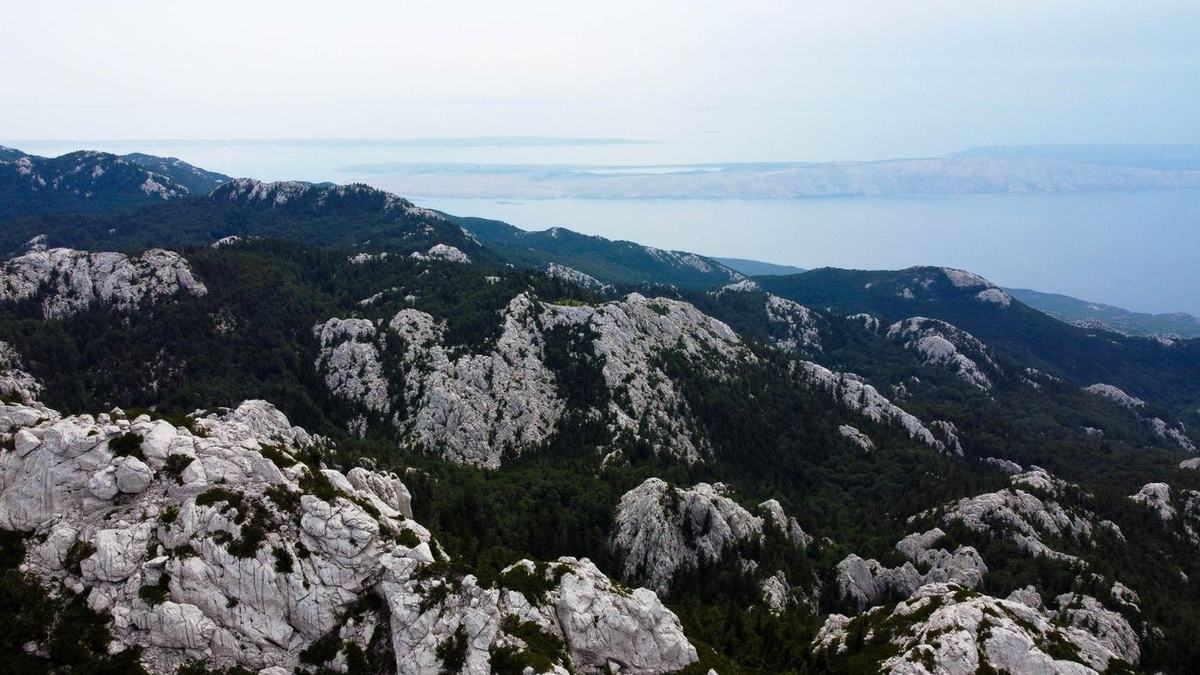
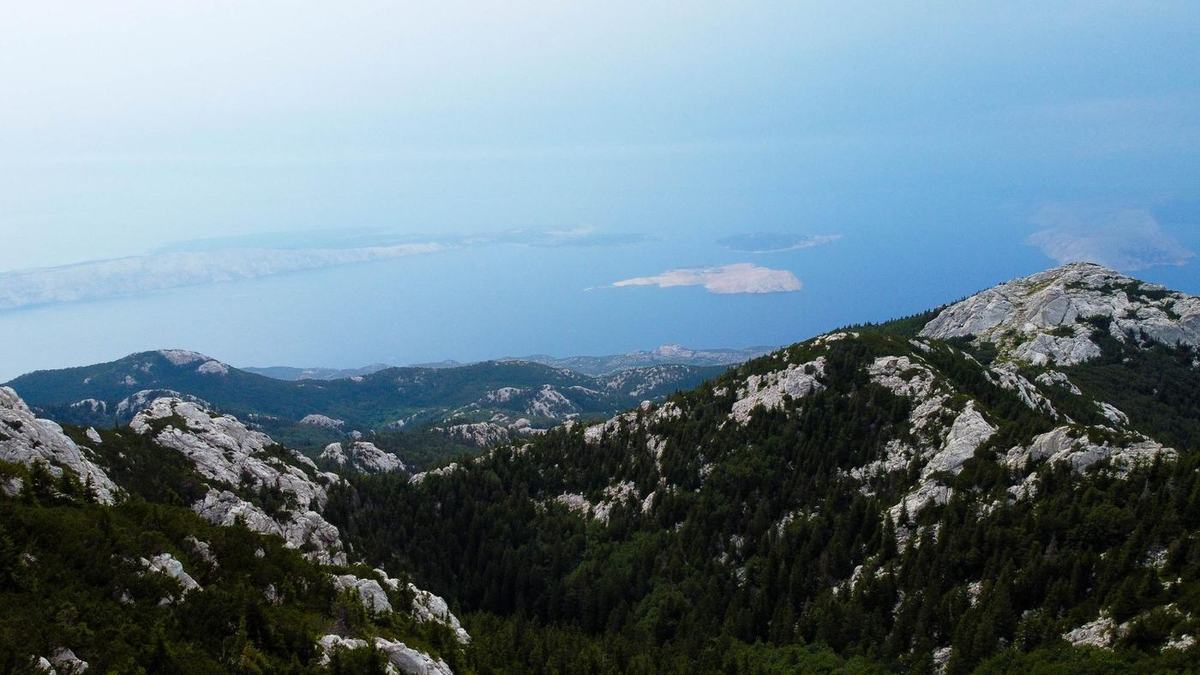
Velebit is the longest mountain range in Croatia, running parallel to the sea for about 145 kilometers. Its northern part forms a national park famous for the Premužić trail, a path built between 1930 and 1933 that winds for roughly 57 kilometers through rocky landscapes, sinkholes and meadows. Gentle gradients make it accessible to any fit walker, and you can hike a short section from Zavižan, where a mountain hut and botanical garden sit just below the summit of Vučjak.
Further south, Paklenica National Park near Starigrad offers dramatic canyons. The trail through Velika Paklenica follows a stream flanked by cliffs where rock climbers practice on hundreds of routes. Continue upward to the Manita peć cave, open for guided visits in season, or to mountain huts that serve simple stews to tired hikers. Views from the higher ridges stretch across the Velebit channel to the bare island of Pag.
Not far away, the Zrmanja river carves its own canyon at the southern end of Velebit. After hours on foot, paddling those calm green waters is a perfect way to rest the legs, and you can arrange canoeing on the Zrmanja and other outdoor adventures with local guides who know each bend.
April and May in Paklenica are especially lovely, when the stream runs full and wild orchids flower beside the path. Climbers gather here around May for an international meeting, so the campsites fill up quickly on that weekend.
Above the Makarska riviera, Biokovo Nature Park climbs from sea level to Sveti Jure, at 1762 meters one of the highest peaks in Croatia. A narrow road winds almost to the top, but walking the old shepherd paths from villages such as Makarska or Bast is far more satisfying. Along the road you will find the Biokovo Skywalk, a horseshoe shaped glass platform suspended over the edge of the cliff, opened in 2020, with dizzying views over the islands of Brač and Hvar.
In the north, Učka rises behind Opatija and Lovran. Its highest peak, Vojak, reaches 1401 meters and carries a stone lookout tower from which you can see the whole Kvarner Gulf, Istria and, on a clear day, the Alps. Trails begin right from the coastal villages, passing chestnut groves that locals celebrate with a festival every October in Lovran. The Vela draga canyon, with its limestone pillars, is another worthwhile stop on the Istrian side.
Both ranges are hot in midsummer. Leave before sunrise, carry at least two liters of water per person and protect yourself from the sun, because exposed karst offers almost no cover.
Watch your step on warm afternoons. The nose horned viper lives among sunny rocks in the Dinaric ranges, and although bites are rare, sturdy boots and a stick to tap ahead on overgrown sections are sensible precautions. Locals simply stay on signposted paths and keep their hands out of crevices.
For cooler walks, head to Gorski kotar, the green heart linking Zagreb and Rijeka. Risnjak National Park protects old beech and fir forests where bears, wolves and lynx still live. The Leska educational trail is an easy loop for families, while the climb to the summit of Veliki Risnjak takes the better part of daylight. Nearby, the source of the Kupa river glows an unreal shade of blue as it emerges from a deep karst spring.
Zagreb residents have their own mountain at the edge of the city. Medvednica, with its peak Sljeme at 1033 meters, is reachable by cable car or by tram and bus to trailheads in Šestine or Gračani. Forest paths lead to mountain lodges serving bean stew, sausages and štrudla, and in winter a small ski slope operates when snow allows. Medieval Medvedgrad fortress makes a short, pleasant detour, with a sweeping view over the capital from its restored walls.
Before setting off, download offline maps and check opening times of mountain huts, since many open only on weekends outside summer. Respect wildlife, keep dogs on a leash and never leave litter behind. After a long hike, nothing beats a plate of Lika lamb, potatoes from the hearth and a glass of homemade juice from forest berries, served in mountain taverns where hikers swap stories. Ask hut keepers about the next morning’s weather, as they read the clouds better than any app.
Our story on living like a local in Croatia shows how outdoor weekends fit into everyday life, and ideas for exploring coves after your hike wait in hidden coves in Istria and Kvarner and the Local Experiences section.